
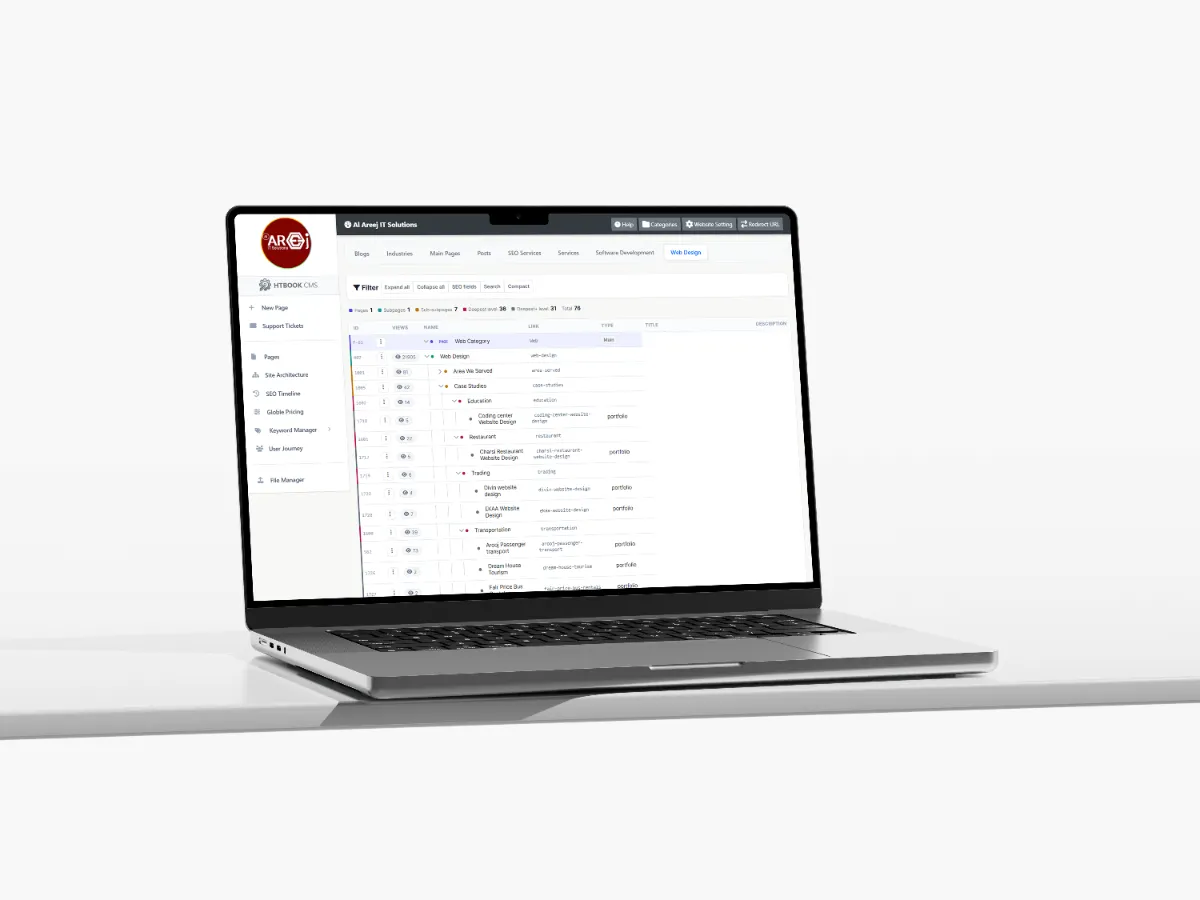
Powerful Content Management System for Websites
Manage website pages, content, SEO, URLs, files, and site structure from one powerful Content Management System built by Al Areej IT.
Read the articleUnderstand the typical steps involved in planning and designing a professional website.
A professional website does not normally come together in one step. There is a process behind it, starting with understanding the business and ending with testing and launching the finished website.
Having a clear process makes the project easier for everyone. The business knows what needs to be prepared, the designer knows what needs to be created, and the development team knows what needs to be built.
The exact process can change depending on the size and type of project, but most professional website projects follow a similar path.
The website design process is the series of steps used to turn a business idea or requirement into a working website.
It normally includes planning the website, organizing its content, creating the visual design, developing the functionality, testing everything, and finally launching the website.
For a simple business website, some of these stages may happen quickly. A large ecommerce website or custom web application may require much more planning and development.
Understand the business, audience, goals, services, features, pages, technology requirements, and overall direction of the project.
Prepare the text, images, product information, service details, company information, and other content the website will need.
Create the visual direction, page layouts, typography, colors, navigation, responsive experience, and overall user interface.
Turn the approved design into a working website and connect the required functionality, database, forms, integrations, and systems.
Check the website across devices and browsers and test links, forms, speed, functionality, security, content, and other important details.
Move the completed website to the live server, configure the final settings, check the live environment, and make sure everything is working correctly.
Before design begins, it helps to understand exactly what the website is supposed to achieve.
A useful project brief should explain the business, target customers, services or products, locations, website goals, important features, competitors, existing branding, and any technical requirements.
You do not need a complicated document. Even a simple explanation of what the business does and what it expects from the website can provide a strong starting point.
Every website should have a reason for existing. The goal might be generating enquiries, selling products, receiving bookings, promoting services, providing information, supporting customers, or building a stronger online presence.
Knowing the goal helps guide later decisions. A website designed mainly for enquiries will have different priorities from an ecommerce store or an internal business application.
Once the goals are clear, decide which pages the website needs and how those pages will connect.
This is where you plan the main navigation, service pages, product categories, location pages, guides, contact pages, and other important sections.
Planning the structure early prevents the common problem of designing pages first and trying to figure out how they connect later.
Content should be considered before the visual design is finalized. The designer needs to know what information each page will contain so the layout can be created around real content.
This includes headings, paragraphs, service descriptions, images, product information, testimonials, FAQs, contact details, and other material that visitors need.
Good content planning also gives SEO a better foundation because important topics and pages can be identified before development begins.
Now the visual side of the website can start taking shape. This includes the overall style, colors, typography, spacing, imagery, buttons, cards, navigation, and other interface elements.
The design should reflect the business rather than simply copying another website. A professional website can be modern without following every design trend.
It is often useful to begin with the most important pages. For many businesses, that means the homepage, main service page, service detail page, and contact page.
These pages establish the main design system that can later be reused across the rest of the website.
Once the basic components are established, additional pages can be designed more consistently and efficiently.
Responsive design should not be something added after the desktop version is finished. The website should be considered across different screen sizes during the design stage.
Menus, cards, images, typography, forms, buttons, and page sections may all need to change as the screen becomes smaller.
Thinking about mobile early usually prevents difficult layout changes later in development.
Once the design direction is approved, the development stage turns the visual layouts into a working website.
This may involve HTML, CSS, JavaScript, PHP, databases, APIs, payment systems, content management systems, booking systems, customer accounts, or other technologies depending on the project.
The development approach should be selected according to the actual requirements rather than using technology simply because it is popular.
A professional website usually contains repeated elements such as buttons, headings, cards, forms, navigation, alerts, tables, and content sections.
Creating reusable components helps maintain consistency and makes future updates easier. If the same component needs to change later, it can be updated without rebuilding every page individually.
Some websites are mainly informational, while others require more advanced functionality.
This could include contact forms, booking systems, ecommerce, customer accounts, dashboards, payment gateways, CRM connections, APIs, databases, search, filters, or other business-specific features.
These requirements should already have been considered during planning so the development process does not become a series of unexpected additions.
A website should never be considered finished simply because the pages look correct.
Testing should cover the actual experience. Open the website on different devices, click the navigation, submit forms, test important buttons, check images, review content, test ecommerce functions if applicable, and look for anything that behaves differently than expected.
Links should work, forms should reach the correct destination, pages should load correctly, images should display properly, and important information should be accurate.
For larger websites, testing should also include user permissions, database operations, integrations, payment processes, security controls, and other project-specific functionality.
SEO should be considered throughout the project, but a final review before launch is still important.
Check page titles, meta descriptions, headings, URLs, internal links, image information, sitemap settings, indexing controls, redirects, and other technical SEO requirements.
The website should also have a clear structure so search engines can discover and understand its important pages.
Speed should be checked before the website goes live. Large images, unnecessary scripts, excessive animations, third-party tools, or inefficient code can all affect performance.
A fast website gives visitors a better experience and provides a stronger technical foundation for future growth.
Before going live, make sure the domain, hosting, SSL certificate, database, email services, forms, analytics, backups, and other required services are correctly configured.
The live environment should be tested again after deployment. Something that worked on a development server can occasionally behave differently on the production server.
Once the website is live, real visitors will start using it. They may find problems or questions that were not obvious during development.
That is why post-launch support is useful. The website can be monitored, updated, improved, and expanded as the business grows.
A good website should not be treated as something that is designed once and forgotten.
You may discover that one service receives more enquiries than another, customers repeatedly ask the same question, a particular page performs poorly, or a new business requirement has appeared.
These observations can be used to improve the website over time.
There is no single timeline for every website. A small business website may be completed relatively quickly, while a large ecommerce platform or custom web application can require considerably more time.
The timeline usually depends on the number of pages, amount of content, design requirements, custom functionality, integrations, feedback cycles, and how quickly the required materials are provided.
A clear plan at the beginning can help prevent unnecessary delays later.
The best website projects are not necessarily the ones with the most features. They are the projects where the business goals, content, design, development, and user experience all work together.
Planning gives the project direction. Content gives the website something useful to communicate. Design makes that information easy to understand. Development makes the experience work. Testing makes sure it is reliable.
When these parts are handled properly, the final website becomes easier to use, easier to manage, and easier to improve.
Not every business needs a completely new website. Sometimes the existing website already has useful content and functionality but needs a better structure, modern design, improved mobile experience, faster performance, or stronger conversion paths.
In those situations, a redesign may be the better option.
Next guide: Website Redesign Guide — learn when an existing website needs a redesign and how to plan the work properly.
Helpful tips, insights and updates on websites, software and digital growth.
Discover the 5 things customers look for within seconds of opening your website, from clear messaging and professional design to trust, navigation, and strong calls to action.
Read the article
Manage website pages, content, SEO, URLs, files, and site structure from one powerful Content Management System built by Al Areej IT.
Read the article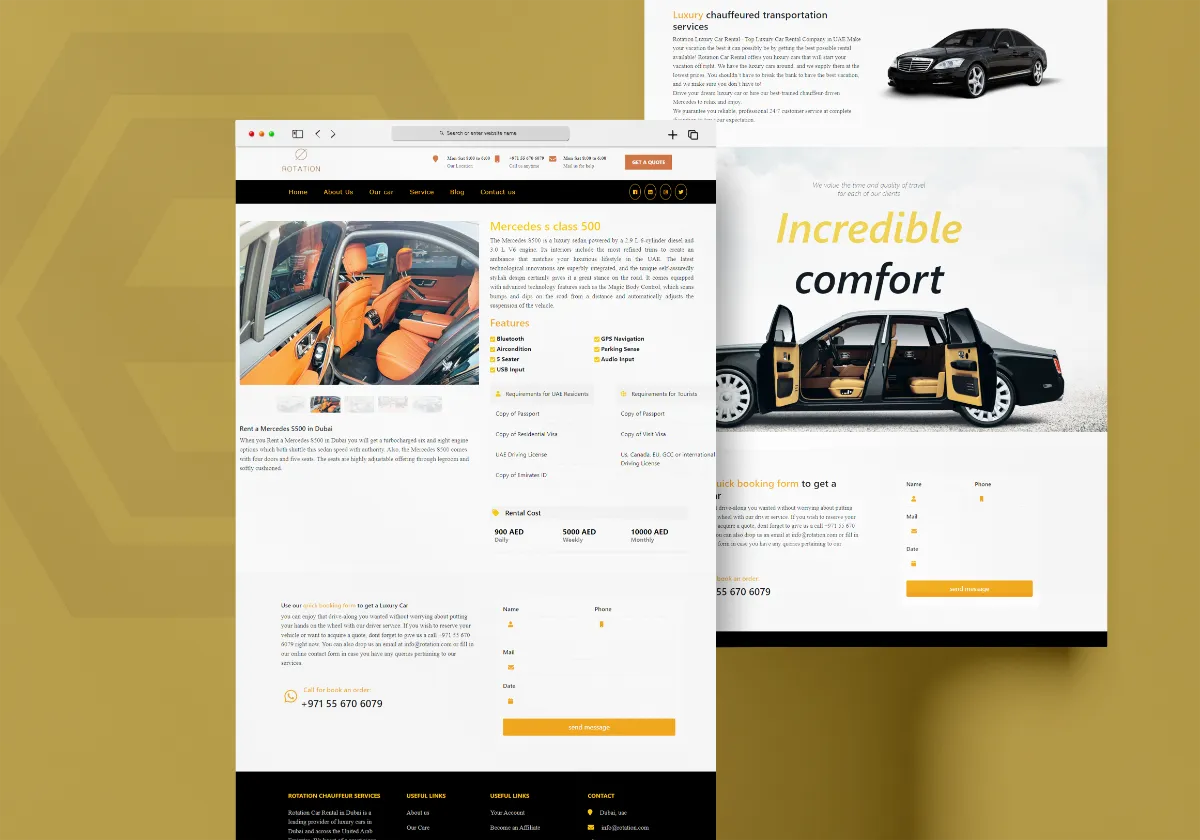
Discover how Al Areej IT designed a professional website for Rotation Car Rental with responsive design, SEO-friendly structure, and stronger Google visibility.
Read the article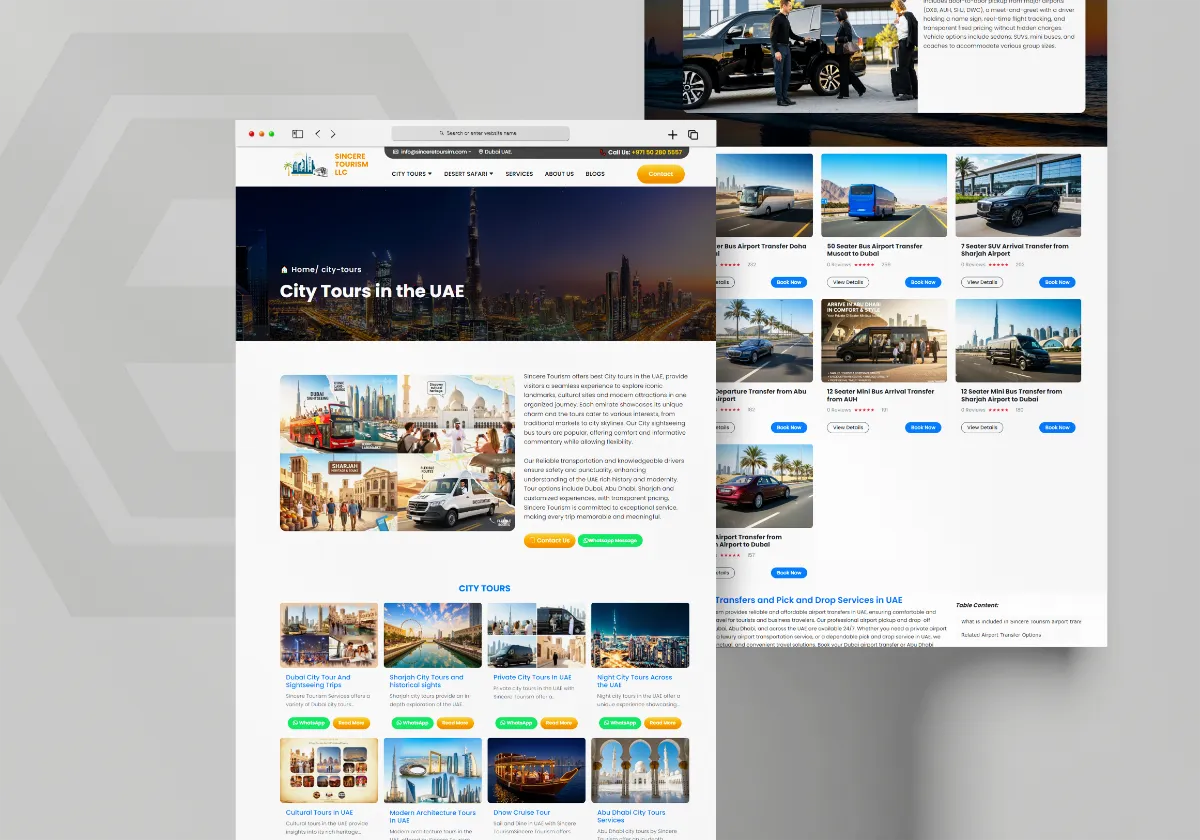
See how Al Areej IT developed a professional website for Sincere Tourism with user-friendly design, SEO-ready content, and stronger Google visibility.
Read the article


