

Professional Content SEO Services
Improve your search rankings with content SEO services. We optimize website content, target relevant keywords, and create SEO-friendly content to attract organic traffic.
Read the articleLearn what web design is, how it works, and why it matters for your business. Discover key elements like layout, colors, user experience, and modern website design tips.
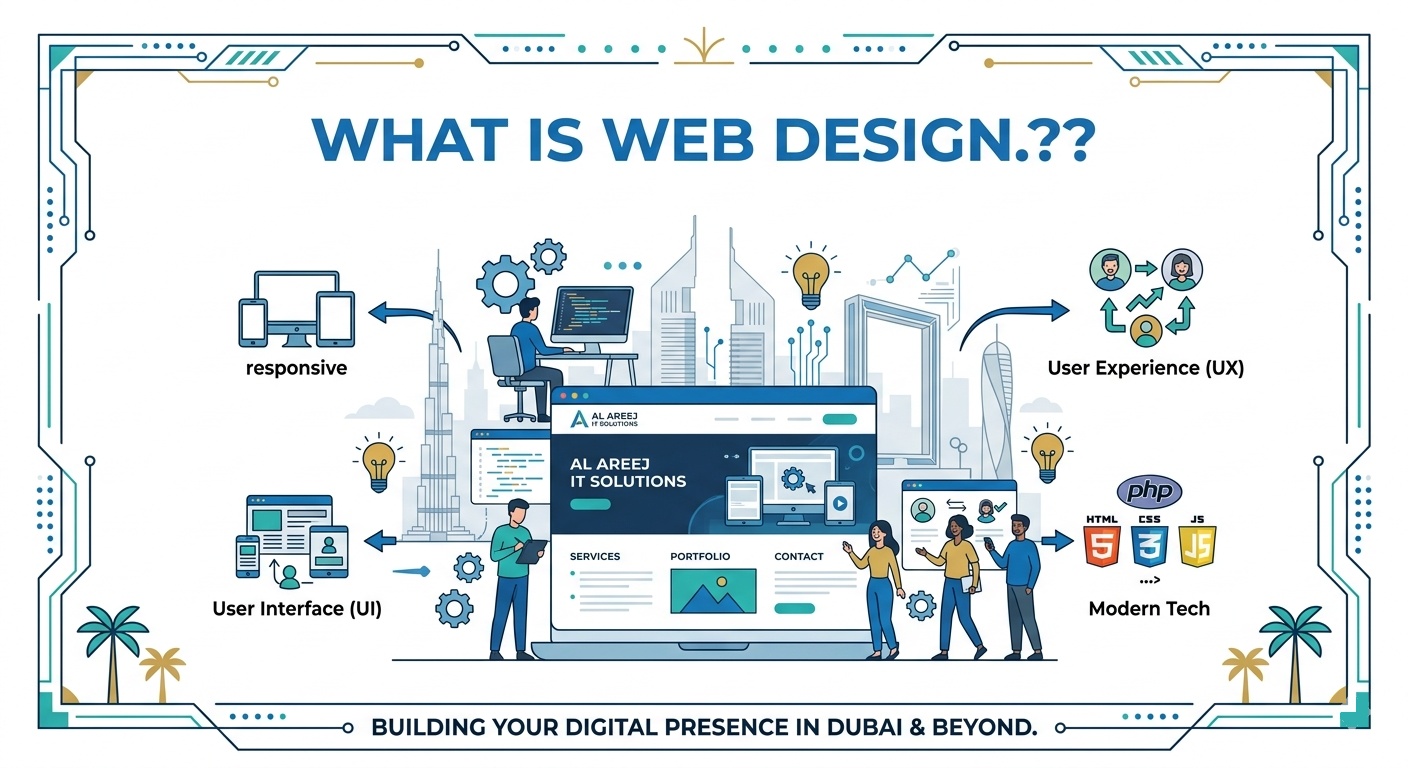
Web design is the process of planning, creating, and arranging the visual appearance, structure, and interactive elements of a website so that it becomes both functional and visually appealing for users across different devices and platforms. It is a combination of creativity, technology, and user-focused thinking that brings together colors, layouts, typography, images, navigation systems, Idea for content structure, and interactive components into one unified digital experience. Web design is not only about making a website look attractive but also about ensuring that users can easily understand, navigate, and interact with the content without confusion or difficulty. A well-designed website guides visitors smoothly from one section to another, helping them find the information they need quickly while maintaining engagement and interest.
In modern digital environments, web design plays a critical role in how businesses, organizations, and individuals present themselves online, as it directly influences user trust, credibility, and decision-making. When a user visits a website, the first impression is formed within seconds, and this impression is largely shaped by the design quality, layout clarity, and overall user experience.
Web design includes multiple interconnected disciplines such as user interface (UI) design, which focuses on the placement of buttons, menus, forms, and interactive elements that users directly interact with, and user experience (UX) design, which focuses on how smooth, logical, and satisfying the overall journey of a user feels while browsing a website. It also involves visual design principles such as color theory, spacing, balance, contrast, and typography, all of which help in creating a consistent and professional appearance.
_____ In addition to aesthetics, web design also includes technical considerations like responsiveness, which ensures that websites work properly on mobile phones, tablets, and desktop computers without losing structure or readability. Another important part of web design is accessibility, which ensures that people with different abilities can also use the website effectively mean building websites for everyone needs in Dubai UAE.
The usage of web design extends across almost every digital industry today. Businesses use web design to showcase their services and products, build brand identity, and attract new customers through online presence. E-commerce platforms rely heavily on web design to create smooth shopping experiences where users can browse products, add items to carts, and complete payments easily. Educational platforms use web design to deliver structured learning materials, while blogs and news websites depend on it to present readable and organized content. Booking systems, travel platforms, and service-based websites also depend on effective design to allow users to search, select, and reserve services without complications with internal linking. Because of this wide usage, web design has become a core foundation of the internet ecosystem, influencing how people interact with digital content every day.
A properly designed website is built with both human behavior and technical performance in mind. It considers how users think, how they scroll, what they click on, and how they make decisions online. At the same time, it ensures that the website loads quickly, works efficiently, and remains stable under different conditions. Web design also connects closely with search engines and digital visibility, because a well-structured and optimized design helps websites appear in search results more effectively. As technology continues to evolve, web design is also becoming more advanced, integrating animations, dynamic content, artificial intelligence features, and personalized user experiences. After understanding the concept and importance of web design in detail, the next step is to understand how a website actually works behind the scenes, how users access it, and how data flows between browsers, servers, and databases to deliver content in real time.
After understanding web design, the next important step is to understand how a website actually works when a user opens it in a browser. A website may look simple on the screen, but behind it there is a complete system of technologies, servers, and processes working together in real time to deliver content, images, and functionality to the user.
When you type a website address (URL) into your browser, such as Google Chrome, a fast digital process starts in the background. Your browser sends a request over the internet to a server. A server is a powerful computer where all the website files are stored safely.
These files include text, images, videos, design styles, and code. Once the server receives your request, it quickly finds the needed data and sends it back to your browser through a high-speed network.
Your browser then reads this data and converts it into a visual web page. This is how you instantly see a fully designed, interactive website on your screen.
This process happens within seconds, and it is repeated every time a user clicks on a link or moves to another page. The speed and performance of this process depend on several factors such as server quality, website optimization, and internet connection. A well-optimized website loads faster because its code is clean, images are compressed, and the server responds quickly.
A website is mainly built using three core technologies: HTML, CSS, and JavaScript. HTML is responsible for creating the structure of the page, such as headings, paragraphs, and sections. CSS controls the design and appearance, including colors, spacing, layouts, and responsiveness. JavaScript adds interactivity, allowing features like buttons, sliders, forms, animations, and dynamic content updates without refreshing the page.
In addition to frontend technologies, many websites also use backend systems. The backend is the hidden part of a website that manages data, logic, and server operations. It is usually built using programming languages like PHP, Node.js, Python, or others. The backend communicates with databases, where all important data is stored, such as user accounts, bookings, products, services or messages. When a user submits a form or makes a booking, the backend processes that information and saves it in the database.
Another important part of how websites work is domain names and hosting. A domain name is the website address (like example.com), which users type in their browser. Hosting is the service that stores website files with database and keeps them accessible online 24/7. Without hosting, a website cannot be accessed by users on the internet.
Websites also interact with search engines, which help users discover them. Search engines continuously scan websites, index their content, and show relevant results when users search for information. This is why SEO (Search Engine Optimization) is important, as it helps websites rank higher and attract more visitors from most popular websites like Google, Bing, yandex, yahoo etc
Overall, a website works through a combination of frontend display, backend processing, server communication, and database management, all connected through the internet. Every click, scroll, and interaction is the result of this continuous exchange of data happening in milliseconds.
After understanding how a website works, the next step is to learn how websites are connected to search engines and how users actually find websites through SEO, keywords, and ranking systems.
Quick answers to help you understand web design essentials.
Think of it like building a house. Web Design is the architecture and style—how the site looks and feels. Web Development is the construction—the technical code that makes the site actually work and respond to clicks.
Most people in Dubai search for services on their mobile phones. Responsive design ensures your website automatically adjusts its size to look perfect on every screen, from small smartphones to large office desktops.
Google rewards websites that are fast, clean, and easy to use. A well-designed site with a clear structure helps your web design in Dubai rank higher, making it much easier for new customers to find your business online.
Helpful tips, insights and updates on websites, software and digital growth.

Launch your business online with the full Website Development Package include a domain, professional website design, CRM dashboard, basic SEO, and Google Business Profile setup.
Read the article
Improve your search rankings with content SEO services. We optimize website content, target relevant keywords, and create SEO-friendly content to attract organic traffic.
Read the article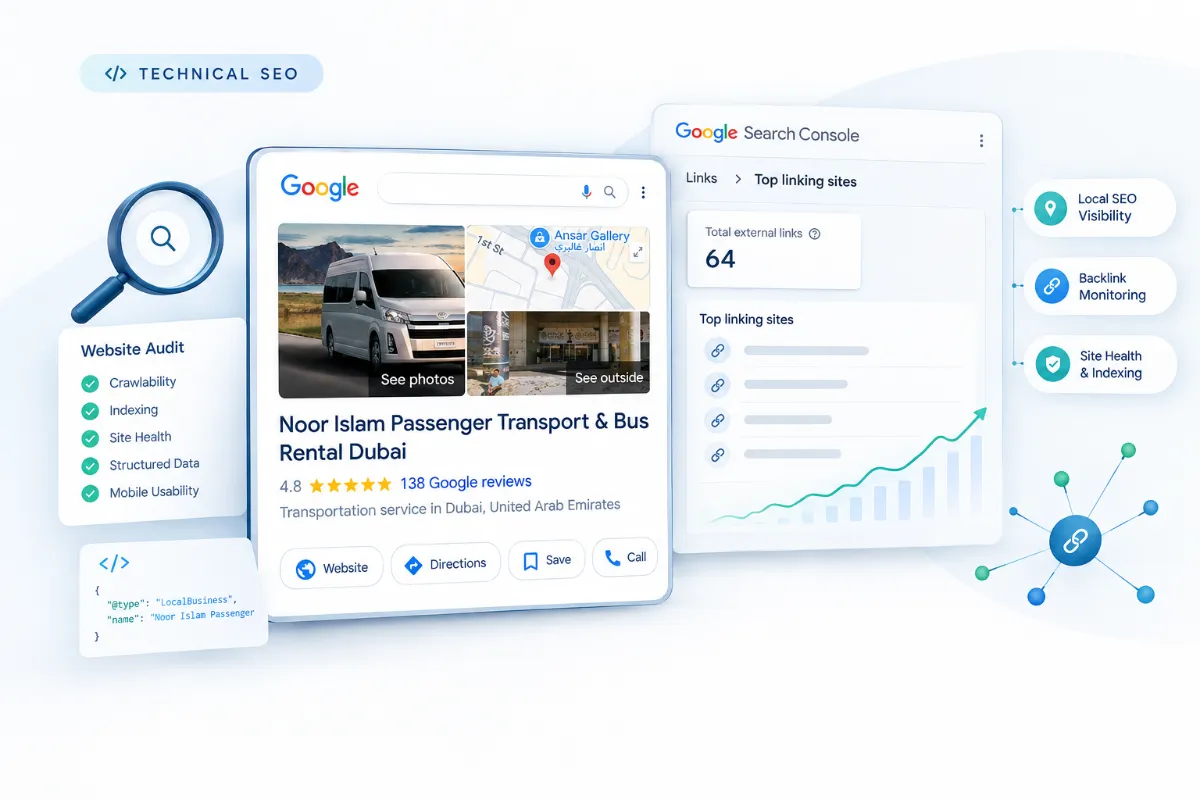
Improve website performance, crawlability, indexing, mobile usability, and technical health with professional technical SEO services.
Read the article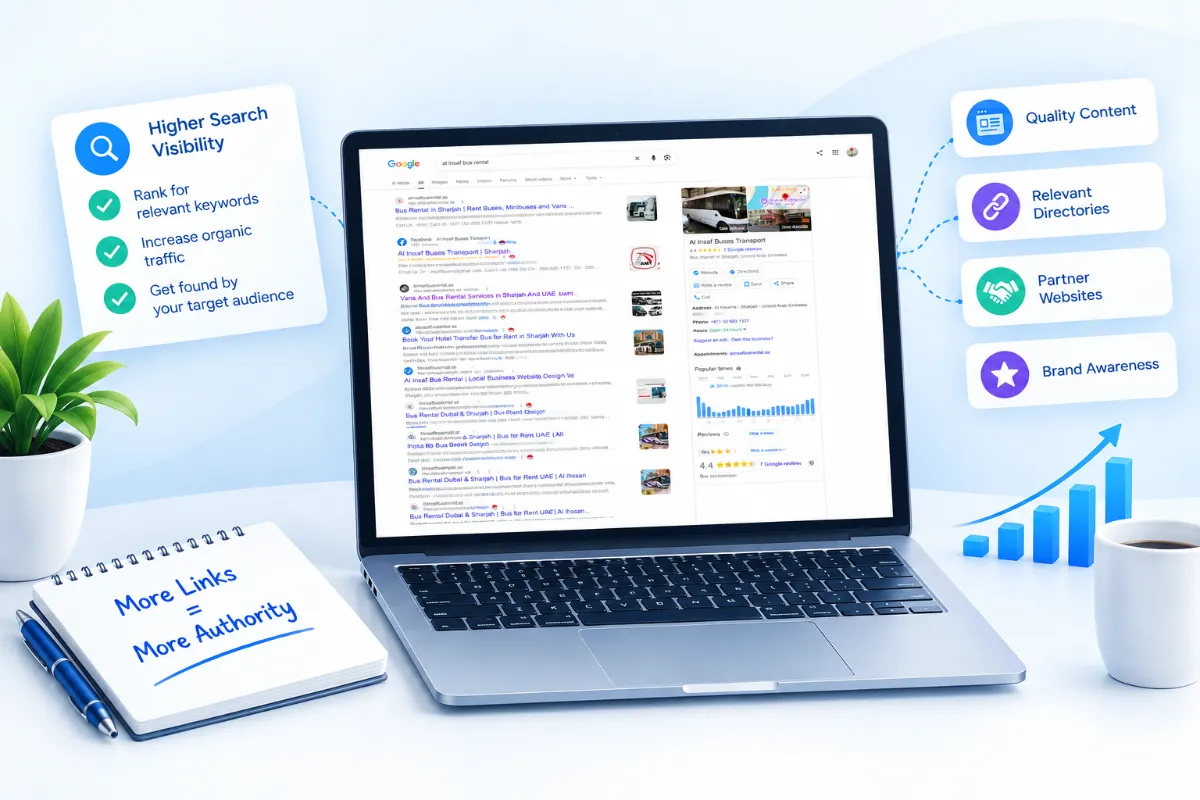
Improve your website authority and search visibility with off-page SEO services, including quality link building, business citations, and online reputation management.
Read the article


